Collard Greens
Brassica oleracea var. viridis
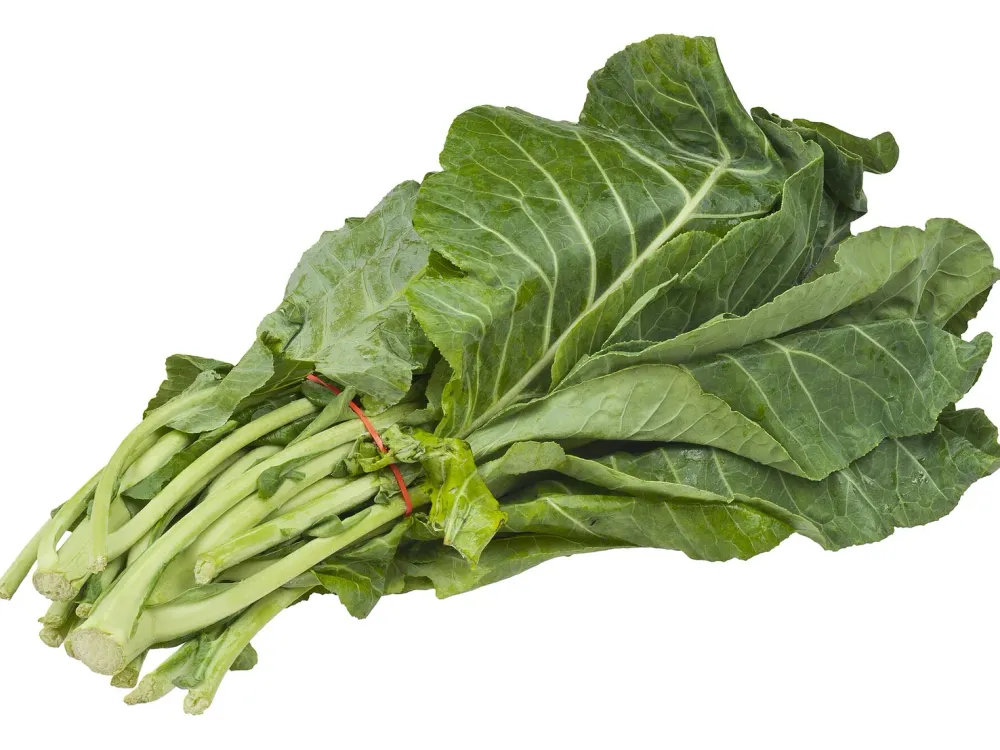
Collard greens are a hardy leafy brassica harvested leaf by leaf over a long cool season. Transplants or direct sowings fit spring and autumn slots, and flavor often improves after light frost touches mature leaves. When grown from transplants, the 55–85 day harvest range begins at transplanting rather than at indoor seed sowing.
Plant family Brassicaceae · Also called collards
Explore this profile
Jump directly to the growing detail you need.
Start indoors or sow in cool soil.
Either direct sow outdoors from four weeks before the last frost through the frost date, or start indoors 6–8 weeks before frost at 0.6 cm depth. Germination is 5–10 days.
When transplants are used, the 55–85 day harvest range is counted from transplanting. Hardy frost tolerance supports autumn plantings that linger into winter in mild climates.
Use this range as a planning baseline and adjust for local conditions.
Use this range as a planning baseline and adjust for local conditions.
Use this range as a planning baseline and adjust for local conditions.
Use this range as a planning baseline and adjust for local conditions.
Leave room for tall leafy plants.
Allow 30–45 cm between plants and 75 cm between rows. Tall leafy plants need airflow and room for repeated lower-leaf harvests.
Containers with 30 cm depth and about 15 litres support one mature plant. Standard space need reflects height and spreading leaves.
Core measurements
Crop-level planning range.
Crop-level planning range.
Crop-level planning range.
Crop-level planning range.
Allow for the mature form of the selected variety.

Install support early when it is required or useful.

Maintain high moisture in dry spells.
Six hours of direct sun is the minimum under the full-sun label. Collards outlast many greens in cold weather once established.
High water at 35–50 mm weekly with pH 6.0–7.5. The key tip recommends picking lower leaves regularly while leaving the growing point intact.
Sunlight
Full sun (6+ direct-sun hours/day)
Soil pH
A suitable acidity range for general growth.
Weekly water
High water need.
Keep soil consistently moist but not waterlogged, especially during establishment and harvest development.
Pick lower leaves for a long harvest.
From transplanting, maturity spans 55–85 days, but lower leaves can be picked earlier on large plants. Continual harvest extends usefulness beyond a single cut.
Succession every 21 days supplies young plants for spring or autumn. Remove oldest leaves first to keep the growing tip productive.
Read with the full crop profile.
Read with the full crop profile.
Read with the full crop profile.
Read with the full crop profile.
Pick lower leaves regularly and leave the growing point intact for continued harvest.
Collard Greens growing questions
How should collard leaves be picked?
Harvest lower leaves regularly and leave the growing point intact so the plant keeps producing, per the key tip.
Is collard harvest measured from sowing or transplanting?
The dataset uses transplanting as harvest basis with a 55–85 day range when starts are used.
How much water do collards need?
Water need is high with 35–50 mm weekly as a planning range, emphasizing even moisture during establishment.
Can collards be direct-sown early?
Outdoor sowing can begin about four weeks before the last spring frost through the frost date.
Profile values are crop-level planning ranges compiled from sources S1,S2,S3,S4. Local climate and variety can change actual results.
Explore another crop
Compare collard greens with other vegetables, herbs, and fruits in Crop Brief.
Browse all 50 crops